


25. Februar 2026
Mantelerlass – significant changes
The energy sector is facing a turning point. With the new Federal Act on a Secure Electricity Supply with Renewable Energies, Switzerland is paving the way for a more sustainable and efficient future. Key components of this transformation are local electricity communities, the promotion of flexibility in the electricity grid, and increased energy efficiency. In order to involve the population in this important decision-making process, a referendum on this law is scheduled for June 9. But how can energy suppliers benefit from the opportunities?
Local electricity communities
One of the key elements of the new draft law is local electricity communities, which offer an innovative way to promote decentralized energy generation and use. Local energy communities enable consumers, producers (known as “prosumers”), storage operators, and other electricity generators to join forces to market and use self-generated electricity locally. They promote the use of renewable energies at the municipal or neighborhood level and strengthen local energy independence.
The most important points about local electricity communities:
- Participant group: local electricity communities are open to prosumers, storage operators, end consumers, and producers who are located close to each other and connected to the same distribution network operator. All participants must be equipped with a smart meter to enable accurate measurement and billing of the electricity consumed or fed into the grid.
- Prerequisite: The amount of energy generated within a local electricity communities must be at least 20% of the total connected load of all participating end consumers. This ensures that the communities make a significant contribution to the local energy supply.
- Grid usage tariffs: Electricity traded within a local electricity communities benefits from a reduced grid usage tariff, which increases the incentive to participate and promote renewable energy production. The Electricity Supply Ordinance provides for a 30% discount (15% when using multiple grid levels).
- Relationship with grid operators: local electricity communities must clearly regulate their relationship with local grid operators, particularly with regard to the use of grid infrastructure and the billing of grid usage fees.
- Access for market-eligible end consumers: Market-eligible end consumers can also participate in a local electricity communities. However, they do not have the option of returning to basic supply by participating in a local electricity communities.
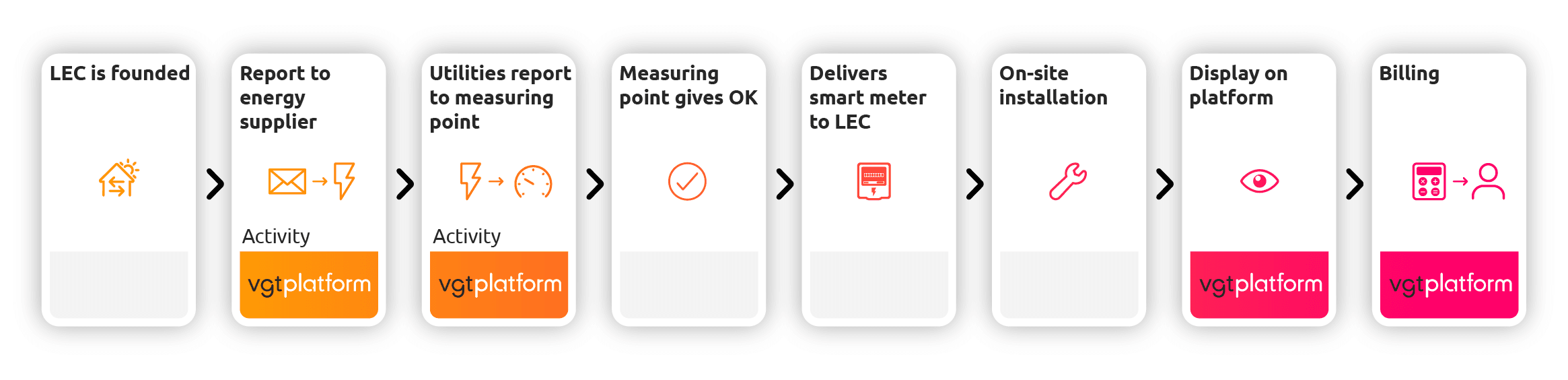 At VGT, we offer the right solution for the entire process, from registering the local electricity communities with the energy supplier to billing.
Flexibility
Promoting flexibility in the electricity system is another component of the new law to ensure a secure and efficient electricity supply. Flexibility in the electricity supply means the system's ability to respond quickly to changes in electricity production and consumption. This is particularly important as the share of renewable energies, which are naturally subject to fluctuations, increases.
The law provides for several measures to promote flexibility:
- Dynamic grid tariffs: The introduction of dynamic grid tariffs is intended to create incentives for consumers to adjust their electricity consumption to the availability of renewable electricity. This could mean, for example, that consumers charge their electric cars when there is a lot of wind or solar energy available.
- Use of storage technologies: Storage technologies, such as battery storage or pumped storage power plants, play a key role in providing flexibility. They can store excess electricity when generation exceeds demand and release this electricity again when demand exceeds supply.
- Virtual power plants and demand response: The networking of decentralized energy producers and consumers into so-called virtual power plants and the use of demand response technologies enable better control of energy flows. This allows the load to be flexibly adjusted to supply, which helps stabilize the power grid.
Energy efficiency
Energy efficiency is another pillar of the law and is essential for achieving Switzerland's energy goals. Increasing energy efficiency should reduce the amount of electricity lost during generation, transmission, and use, thereby lowering overall energy consumption. The law relies on several strategies to achieve this:
- Efficiency targets for energy suppliers: Energy suppliers are required to reduce their customers' electricity consumption through efficiency measures. This can be achieved through consulting services, the promotion of efficient appliances, or the use of modern technologies to optimize energy consumption.
- Promotion of efficiency measures: The law provides for financial support for efficiency measures in households, industry, and commerce. These include, for example, the renovation of buildings, the switch to energy-efficient lighting and heating systems, and the optimization of production processes.
- Switzerland-wide efficiency programs: In addition to specific efficiency projects, the law also promotes Switzerland-wide programs aimed at systematically reducing energy consumption in various sectors. These programs are designed to be easily accessible and to have a broad impact.
By combining measures to increase flexibility and energy efficiency, the law is making a decisive contribution to putting Switzerland on a more sustainable and environmentally friendly energy path.
Switzerland's energy future will be green, decentralized, and efficient. Innovative solutions are needed to make this vision a reality.
Ultimately, not only energy suppliers and their customers will benefit from a more resilient, environmentally friendly, and cost-efficient energy future, but society as a whole.